

The Eternal Question: Black and White or Colour?
The eternal question: black and white or colour? I have often been asked why I hardly ever shoot in black and white. There is a reason for it, so I decided to explain my point of view.


We are naturally drawn to things that surprise us, that are different from what we expect. As Boris Vian said, “Habit weakens impressions.”
When you see a photograph that is a faithful reproduction of what was in front of the camera, it does not always have the same impact as an image that transforms reality in some way.
Our eyes are used to seeing the world in colour and with a certain intensity of colour. If a photograph reproduces that exactly, there may be nothing unexpected about it. Black-and-white photography, on the other hand, immediately changes the way we perceive the scene because we do not naturally see the world in black and white.
In the early days of photography, black and white was the only option. Colour photography simply did not yet exist as a practical technology. That is one of the reasons why black and white can also be associated with a classic or retro aesthetic, although it does not necessarily have to be used that way.
Before the digital era, controlling colour was far more difficult. Chemical processes offered much less freedom to manipulate colour and create images that showed a different interpretation of reality. In that sense, colour was much harder to master. Even instant photography, such as Polaroid, became known for its characteristic colour casts and distinctive look.
Black and white, by contrast, had been explored and refined for decades. It is a simpler system in terms of colour information, and very different results can be achieved through relatively few variables, whether by using coloured filters when taking the photograph or, in digital photography, during processing.

Color
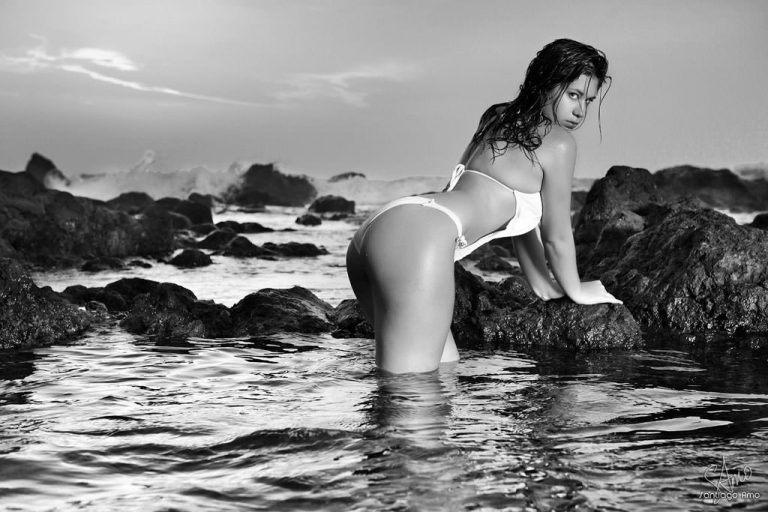
BN 1
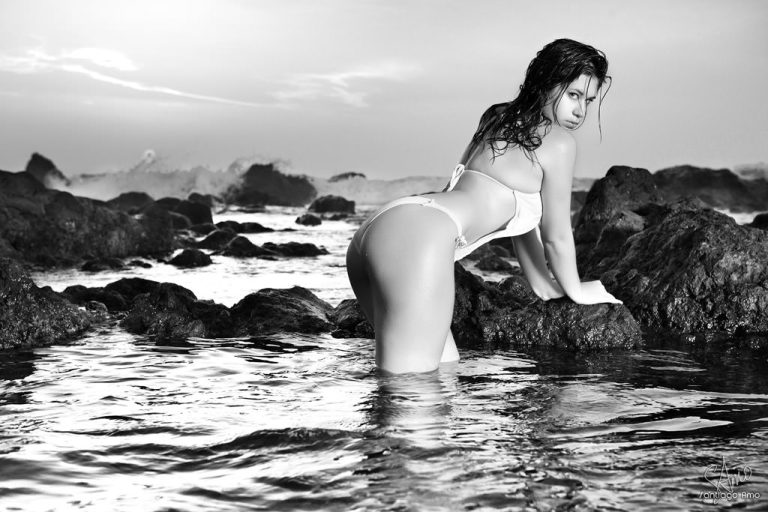
BN 2
Today, colour can be controlled with enormous precision. A colour photograph can be just as striking as a black-and-white one because the eye can be attracted by tone, contrast and colour relationships.
Flash photography can create especially powerful colour images because artificial light allows us to see scenes in a way that does not occur naturally. Modern cameras, with their wide dynamic range, also give us far more flexibility when working in colour.
In the following photograph, I used lighting specifically designed to create visual impact through colour, intensifying the reds and bringing out the different tones in the scene:


The reds of the car appear much stronger than they did in reality thanks to red-filtered lighting, while the area on the right has a bluish atmosphere created with artificial lights. That colour environment did not really exist at the location. The eye did not see the scene that way, and that is precisely what gives the photograph its impact.
The black-and-white version can also be striking, but it contains less colour information for the eye to explore. In the same way that flowers use colour to attract insects, colour itself can be a powerful way of attracting attention.
When I make an image directly in black and white, it is usually because the client has specifically requested it or because I have not found a convincing way to make the scene work in colour.
This can happen in situations where everything consists of very pale or pastel tones, including the skin, and the scene is already close to monochrome. Unless you introduce coloured lighting, which is not always practical, there may simply not be enough colour contrast to work with.


Both colour and black-and-white photography can produce very striking results using digital techniques, including approaches inspired by HDR. The difference today is that colour can also be controlled and shaped with great precision in order to create impact.
There are also certain photographs where black and white works particularly well because of the period or atmosphere being represented:


But the truth is that I am strongly drawn to colour, and between the two photographs above I would choose the colour version without hesitation.
With the right lighting, colours can be enhanced beyond what we see naturally, and with very little editing we can create an image that attracts attention precisely because of its colour.
There are exceptional photographers who are true masters of black-and-white photography, and I have enormous respect for their work. But personally, I am much more attracted to colour. My eye simply enjoys the extra visual information offered by a well-lit colour photograph.
In the end, of course, it all comes down to personal taste — and when it comes to taste, there are plenty of colours to choose from.
Conversation